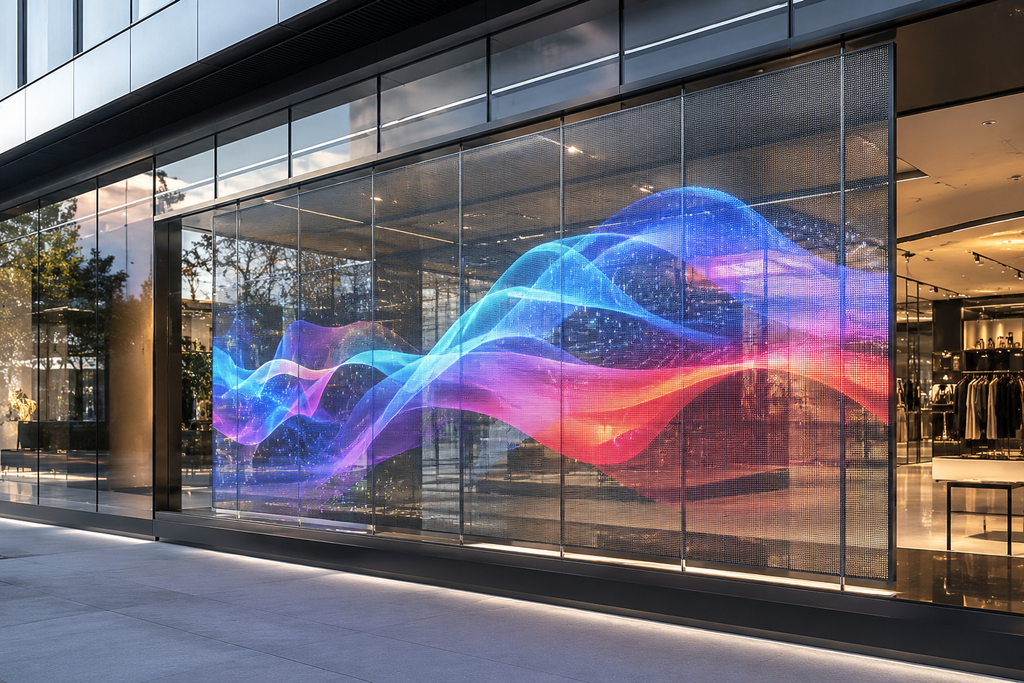
A Transparent LED Display allows retailers and commercial property owners to show digital content on glass without completely blocking the view behind it. Unlike a conventional LED wall, a transparent screen can preserve daylight, architectural visibility and the open feeling of a storefront.
This combination makes transparent display technology suitable for retail windows, shopping malls, showrooms, airports and branded commercial spaces. However, a successful project depends on more than selecting a screen with a high transparency specification. Viewing distance, brightness, pixel pitch, installation structure and content design must all be considered.
Reviewing different LED display solutions during the planning stage can help project teams determine whether a transparent screen is more suitable than a conventional, flexible or creative LED display.
Why Use a Transparent LED Display on Glass?
Traditional digital signage often covers a large part of a window or requires a solid supporting wall. A Transparent LED Display creates a different visual effect by allowing customers to see digital content and the physical space behind it at the same time.
Retailers can use this effect to present:
- New product launches
- Seasonal campaigns
- Brand videos
- Promotional messages
- Store opening information
- Animated visual effects
- Event announcements
The display becomes part of the storefront rather than a separate advertising panel. When the content uses dark or empty areas effectively, products and interior displays can remain visible through the screen.
Transparent LED Film or Cabinet-Based Screen?
Transparent display products are available in several structures. The right format depends on the glass, screen size, maintenance requirements and installation environment.
Transparent LED film is lightweight and can be applied to suitable glass surfaces. It is useful when the project needs a slim appearance and minimal structural impact. A product such as the StarLink transparent LED film display can turn windows and glass facades into digital media surfaces while maintaining visibility.
Cabinet-based transparent LED screens use modular panels supported by a structural frame. They are generally suitable for larger installations, rental projects and environments where modules need to be removed or replaced individually.
Before selecting a format, buyers should inspect the glass dimensions, support points, power access and maintenance route.
Viewing Distance and Pixel Pitch
Pixel pitch affects image detail and recommended viewing distance. A smaller pixel pitch creates a denser image, but it also increases the number of LEDs and electronic components.
A storefront viewed from a nearby pedestrian area may require a finer pitch than a large facade viewed from across a road. Selecting the smallest available pitch is not always necessary. The screen should be matched to the actual distance from which most people will see the content.
The final screen resolution also depends on the physical dimensions. Content creators should know the exact pixel width and height before preparing videos or animations.
Brightness and Environmental Conditions
A Transparent LED Display installed behind glass must compete with daylight, reflections and surrounding lighting. A screen that looks bright indoors may appear weaker when placed near a sunlit window.
The project team should evaluate:
- Window orientation
- Direct sunlight
- Reflections from nearby buildings
- Interior lighting
- Evening viewing conditions
- Operating hours
Maximum brightness should not be the only consideration. The screen also needs stable color, suitable contrast and adjustable brightness for different times of day.
Outdoor transparent screens require additional weather protection. Waterproofing, operating temperature, wind load, corrosion resistance and structural safety should be confirmed before installation.
Transparency and Image Visibility
Transparency and image density must be balanced. A highly transparent screen preserves more of the architecture behind it, while a denser screen can produce a stronger image.
The best balance depends on the project goal. A luxury retail window may prioritize visibility into the store. A promotional installation at an exhibition may prioritize stronger digital content.
Buyers should evaluate real product samples under lighting conditions similar to the final location. Photos taken in a dark showroom may not represent performance in a bright retail environment.
Installation and Maintenance
The glass itself should not be treated as the only supporting structure unless the installation has been professionally evaluated. Screen weight, mounting points, ventilation, cable routing and access for maintenance must be planned.
Transparent film products may simplify the visual structure, but technicians still need access to power supplies, controllers and connection points. Modular displays need enough space to remove panels or service electronic components.
A clean installation should minimize visible cables and avoid obstructing doors, emergency routes or customer movement.
Content Design for Transparent Screens
Content made for a conventional LED wall may not work well on a transparent screen. Large areas of bright, solid color can reduce the visual benefit of transparency.
Effective transparent-screen content often uses:
- Strong outlines
- Floating product graphics
- High-contrast text
- Particle effects
- Animated logos
- Dark or empty backgrounds
- Short visual sequences
The physical products behind the glass can also become part of the composition. Digital graphics can appear to move around merchandise or highlight specific objects in the store.
The transparent LED display project at F1 Jeddah demonstrates how see-through visual technology can support branded environments without creating a fully closed digital wall.
Questions to Ask Before Ordering
Before choosing a Transparent LED Display, prepare the following information:
- What are the screen width and height?
- Is the installation indoors, behind glass or fully outdoors?
- What is the minimum viewing distance?
- How much direct sunlight reaches the screen?
- What level of transparency is required?
- How will the display be mounted?
- Where will the control equipment be installed?
- How will technicians access the screen?
- What content resolution is required?
- When must the project be completed?
These details help the supplier recommend a suitable pixel pitch, structure, brightness and control system.
Final Considerations
A Transparent LED Display can turn an ordinary window into an active media surface while keeping the interior visible. Its value comes from the combination of digital communication and architectural openness.
Successful projects begin with the installation environment rather than a product specification alone. Buyers should compare transparency, image quality, structure, maintenance and content requirements as one complete system.
Reviewing a broader LED display product range can help project teams determine whether a transparent screen, flexible display or conventional LED wall is the most appropriate solution.
For a project-specific recommendation based on screen size, glass conditions and viewing distance, buyers can contact JR Visual with their drawings and installation requirements.