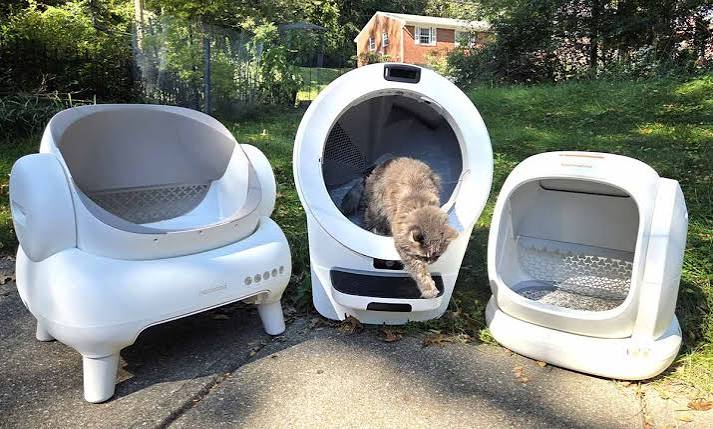
Most cat owners do not resent scooping once. The problem is that litter duty never really ends. Twice a day, every day, the box needs attention, and a single skipped scoop is enough to turn a clean corner of the house into a smell that visitors notice before you do. For people balancing work, travel, and family, that routine adds up to hours every month, and it is usually the first chore to slide when life gets busy.
This is where a self cleaning litter box earns its place in a home. It does not remove litter care from your life, but it moves most of the repetitive work into a machine that runs on a schedule instead of on your memory. Understanding what the unit handles, what it leaves to you, and how to match one to your cat is the difference between a genuinely useful purchase and an expensive gadget that ends up unplugged in the garage.
Why Litter Duty Wears Owners Down
Scooping looks trivial until you count it. Two passes a day at five to eight minutes each adds up to roughly an hour a week, and that estimate assumes a healthy cat with predictable habits. Cats that eat quickly, drink a lot, or live in a household with two or three feline residents can double the load. Miss a session and the consequences stack: ammonia builds, the box becomes unpleasant, and cats begin choosing the rug, the laundry pile, or the bathtub instead. Once that habit forms, retraining takes weeks.
The real cost of litter duty is not the minutes themselves but the attention it demands. It is a task that has to be remembered, scheduled around, and handled even on days when you are sick, traveling, or working late. Automating the repetitive middle of that routine — the scooping — protects both your time and your cat’s willingness to use the box.
What the Machine Actually Automates
An automated unit replaces the scoop with a cycle. Most models run on weight sensors or motion sensors that detect when a cat has entered and left, then wait a short delay before raking or rotating the litter bed. The delay exists so the cat is never inside during a cycle, and a second set of safety sensors stops the motor if anything interrupts the path. That mechanism, simple as it sounds, is the core of the product. Everything else — the app, the lights, the alerts — is built around it.
Sensing and Raking
The quality of the sensors decides how often the unit misfires. A reliable model recognizes a cat, waits until it has fully exited, and then completes a full cycle without stalling halfway. Cheaper units sometimes trigger on a passing shadow or a curious paw, which means repeated interruptions and litter scattered outside the box. When you compare models, look at how the cycle is triggered and whether the motor reverses safely when it meets resistance. A self cleaning litter box that pauses cleanly and resumes without jamming is worth more than one with a longer feature list and an unreliable rake.
Rake design matters almost as much as the sensor. Wide teeth move more litter per pass but can drag soft clumps apart; narrower teeth are gentler on the bed but take longer to clear. Either approach works when the litter is deep enough and the clumps have had time to set, which is why a short delay after each visit is not wasted time.
Waste Storage
Collected clumps and solids land in a sealed drawer or compartment, usually lined with a bag. The seal is what keeps odor contained between emptyings, and it is the part buyers underestimate. A drawer that closes tightly and holds several days of waste for one cat is a practical choice; a drawer that requires daily emptying defeats much of the purpose. Capacity should match the number of cats, not the marketing copy. Two cats produce roughly twice the volume, and a small compartment will need attention far more often than the weekly schedule you imagined.
The Tasks That Stay on Your List
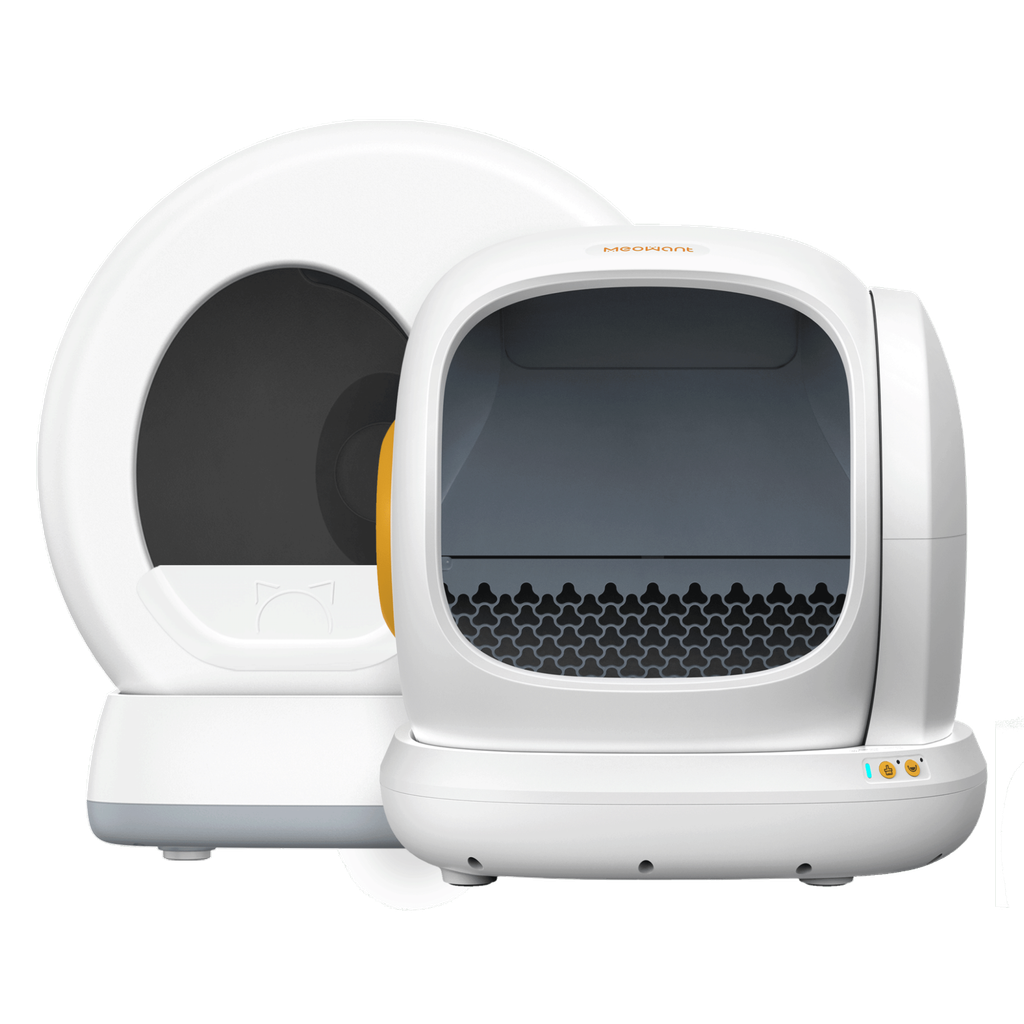
Automation does not eliminate litter care, and expecting it to is the fastest route to disappointment. You will still add fresh litter as the level drops, because the machine cannot replenish itself. You will empty the waste drawer, which for a single cat usually means every few days and for a multi-cat home means more often. You will wipe down the interior and the rake arms, since fine dust and sticky residue collect on surfaces the cycle never touches.
Roughly once a month, the unit needs a deeper clean: the drum or globe removed, washed, dried, and reassembled. None of these tasks are difficult, and together they take far less time than daily scooping. But they are not optional. Owners who treat the machine as fully hands-off tend to let maintenance slide, and a neglected automated box smells worse than a well-kept manual one because the waste sits hidden and accumulates.
Matching the Unit to Your Cat and Home
The best-reviewed machine in the world is useless if your cat refuses it. Start with physical fit. A large cat needs a spacious interior and a low entry height; a senior cat with arthritis needs a gentle step-in and a stable floor. Kittens should generally stay with a simple open box until they are big enough to trigger the sensors reliably, since a unit that cycles under a small cat is a safety risk rather than a convenience.
Then consider placement. The unit needs a level surface, a nearby outlet, and enough clearance for the lid or globe to move. It also needs to sit somewhere your cat already feels comfortable, not tucked into a damp basement corner. Noise matters more than most buyers expect: a quiet cycle is easy to ignore, while a loud one can scare a nervous cat away permanently. Listen to the unit in person if you can, or read owner reports about motor volume rather than trusting a spec sheet.
A Day in the Life With an Automated Box
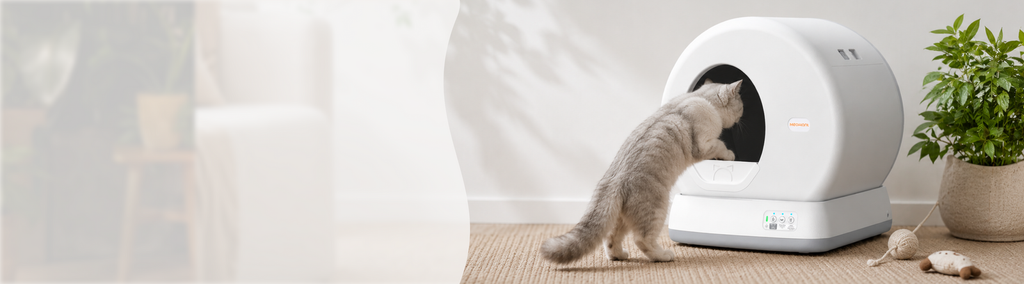
It helps to picture how the routine actually changes. In a manual setup, the morning starts with a scoop before coffee and often a second pass after dinner, plus a full litter change every couple of weeks that leaves dust on every surface. With an automated unit, the morning visit triggers a cycle on its own, and your only task is a quick glance at the drawer and the litter level. If both look fine, you walk away. The evening check takes under a minute in most homes.
The weekly rhythm is similarly lighter. Instead of seven days of scooping, you have one wipe-down, one drawer change, and a top-up. The monthly deep clean remains, but it replaces the full litter changes you used to do anyway. Owners consistently report that the biggest change is not the time saved but the mental load: the box stops being something you have to remember and becomes something that mostly handles itself. That shift is why people who work long hours or travel regularly find the investment worthwhile.
There is an adjustment period, and it is worth planning for. The first week usually involves watching the cycle complete a few times, checking that the sensors behave, and confirming your cat is comfortable. Keep the old box available during that window. Once the pattern settles, the machine fades into the background, which is exactly what a good appliance should do.
A Short Buying Checklist
Before committing, run through the practical points that separate a good fit from a return:
- Interior size and entry height suited to your cat’s age and build
- Sensor and safety behavior that stops the cycle when a cat approaches
- A sealed waste drawer sized for your household
- Replacement parts and liners that are easy to find and reasonably priced
- A return window long enough to confirm your cat will actually use it
Brands in this category vary widely in build quality. Meowant, for example, designs units around the everyday realities of litter care rather than app features, which is the right priority for most homes. Whatever you choose, buy from a seller with a clear return policy, because cat acceptance cannot be predicted from a product page.
It also pays to think about the long view. A machine that runs several cycles a day for years will wear on the motor, the rake, and the seals, so spare parts availability matters more than most buyers expect. Check that the seller stocks replacement rakes, liners, and filters, and read the warranty terms carefully. A unit backed by a responsive brand is a safer bet than a slightly cheaper model with no support channel. If you are comparing two options that look similar on paper, choose the one you can service.
The Bottom Line on Automated Litter Care
A self cleaning litter box is not a magic solution, and it is not meant to be. It is a tool that removes the most repetitive part of cat care while leaving the parts that require judgment — refilling, emptying, cleaning, and watching your cat’s habits — in your hands. Judged on that basis, it is genuinely useful. The hours it saves accumulate quietly, and the consistency it provides protects your cat from the odor and stress of a neglected box.
The purchase only goes wrong when expectations are set too high or when the unit is matched poorly to the cat using it. Choose for fit, sensor reliability, and serviceable parts; plan for a modest weekly routine; and give your cat time to adjust. Do that, and the machine becomes exactly what it should be: a quiet improvement to a chore that never really goes away.