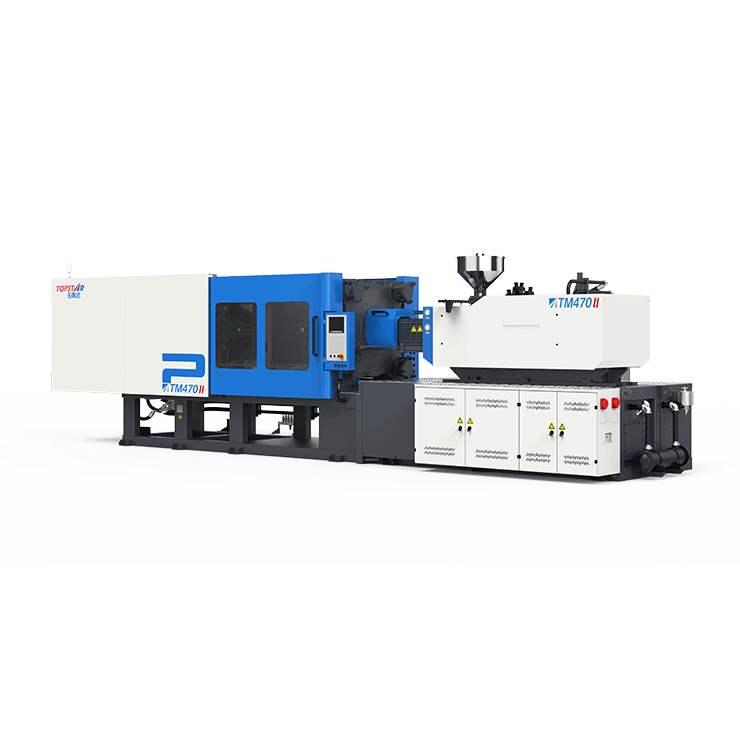
Moulding machines play a decisive role in product quality, dimensional accuracy, and production efficiency. Among all machine parameters, clamping force is one of the most critical yet most misunderstood factors. Many manufacturers believe that increasing clamping force automatically improves product quality. However, excessive clamping force can damage the mould, increase energy consumption, and accelerate machine wear. On the other hand, insufficient clamping force can lead to defects such as flash, dimensional instability, or mould separation during injection moulding.
Therefore, the challenge for engineers and operators is clear: how to configure the moulding machine to precisely match the clamping force to the requirements of the moulding process. In an injection moulding machine, the clamping system must tightly clamp the two mould halves together. At the same time, molten plastic is injected into the cavity under high pressure. If the clamping force is not properly calibrated, the entire injection moulding process becomes unstable.
Moulding Force of the Moulding Machine
To properly adjust the clamping force of the injection moulding machine, operators must first understand the basic function of the clamping system. The clamping unit of the injection moulding machine maintains mould closure during the injection phase, when molten plastic is injected into the mould cavity under high pressure. During injection, the pressure inside the mould cavity becomes very high. Even a slight separation of the mould halves can cause molten material to overflow from the parting line. This results in flash defects that affect not only the product’s appearance but also increase post-processing costs.
Therefore, the clamping force of the moulding machine must be sufficiently high to counteract the cavity pressure during injection. In engineering terms, the clamping force must be greater than the projected area of the moulded part multiplied by the cavity pressure. However, excessive force is not beneficial. Over-clamping can cause unnecessary stress on the mould structure and the injection moulding machine’s mechanical components, increase energy consumption, and shorten equipment life.
Moulding Machine Clamping Force Calculation: Determining the Correct Force Range
Accurate calculation is crucial when setting clamping force parameters in a moulding machine. Engineers typically estimate the required clamping force based on the projected area of the moulded product and the expected injection pressure.
The commonly used basic calculation formula in injection moulding machines is: Clamping Force = Projected Area × Cavity Pressure × Safety Factor.
When viewed from the mould opening direction, the projected area includes the total surface area of the moulded part and the runner system. For most plastic materials, cavity pressure typically ranges from 30 to 60 MPa, depending on the material type, mould design, and injection speed. For example, if the projected area of the product is 300 square centimetres and the expected cavity pressure is 40 MPa, the estimated clamping force will be calculated accordingly. Engineers usually allow a safety margin to ensure the moulding machine operates within a stable range. However, modern injection moulding machine technology allows for more precise adjustments, reducing the need for excessive safety margins.
Clamping Force Adjustment: Optimising Machine Parameters
Once the theoretical clamping force is determined, the operator must adjust the moulding machine’s actual parameters to match production conditions. In moulding machines, clamping force adjustment typically involves modifying several key parameters in the machine’s control system. These parameters include mould protection settings, mould closing speed, and pressure phases within the clamping cycle. The common practice is to initially apply a slightly higher clamping force and then gradually decrease it while closely monitoring product quality. The operator will carefully observe the moulded part for flash or deformation.
The injection moulding machine is in its optimal clamping state when the clamping force is reduced to a minimum level that still prevents flash defects. This optimisation process offers several advantages, including reduced mechanical stress on the mould, lower energy consumption, increased machine lifespan, and consistent product dimensions. Modern injection moulding machine systems also provide real-time monitoring, enabling operators to track the clamping force curve throughout the moulding cycle. These advanced monitoring tools make it easier to fine-tune clamping parameters, resulting in stable and efficient production.
Mould Protection Settings: Preventing Equipment Damage
Another important aspect of the moulding machine clamping force adjustment is the mould protection function. This function prevents mould damage during the injection moulding cycle’s closure phase. When the mould closes, there is always a risk of foreign objects, unfinished parts, or runner debris remaining in the mould cavity. If the injection moulding machine immediately applies full clamping force, these obstructions can cause serious damage to the mould.
To prevent this problem, most moulding machine systems include a low-pressure mould-protection phase. During this phase, the mould closes slowly and with limited force. If the system detects abnormal resistance, the machine automatically stops to protect the mould. Properly configured mould protection settings ensure the safe operation of the injection moulding machine while maintaining stable clamping performance.
Balancing Clamping Force and Power Consumption
Energy efficiency has become an increasingly important consideration in moulding machine operation. The clamping system of an injection moulding machine consumes a significant portion of the machine’s energy. When the clamping force is set too high, the machine consumes extra power without improving product quality. Reducing unnecessary clamping forces lowers power consumption, reduces hydraulic load, reduces mechanical wear, and extends machine life. Many advanced injection moulding machine designs now employ servo-driven clamping systems. These systems automatically adjust the clamping force according to real-time production needs. Therefore, the injection moulding machine operates more efficiently while maintaining stable mould closure. Energy optimisation not only reduces operating costs but also contributes to sustainable production practices.
Achieving Perfect Injection Moulding
Achieving perfect injection moulding requires more than just setting the correct clamping force; it requires optimising the entire injection moulding process. Injection speed, melt temperature, holding pressure, cooling time, and clamping force must work together to create stable production conditions. For example, excessive injection speed can cause cavity pressure to exceed the planned range, forcing the injection moulding machine to require higher clamping forces. By carefully balancing all process parameters, engineers can reduce pressure fluctuations and maintain consistent mould closure. Continuous monitoring and data analysis also help identify trends that may affect clamping performance.